Transforming Sound into Actionable Data
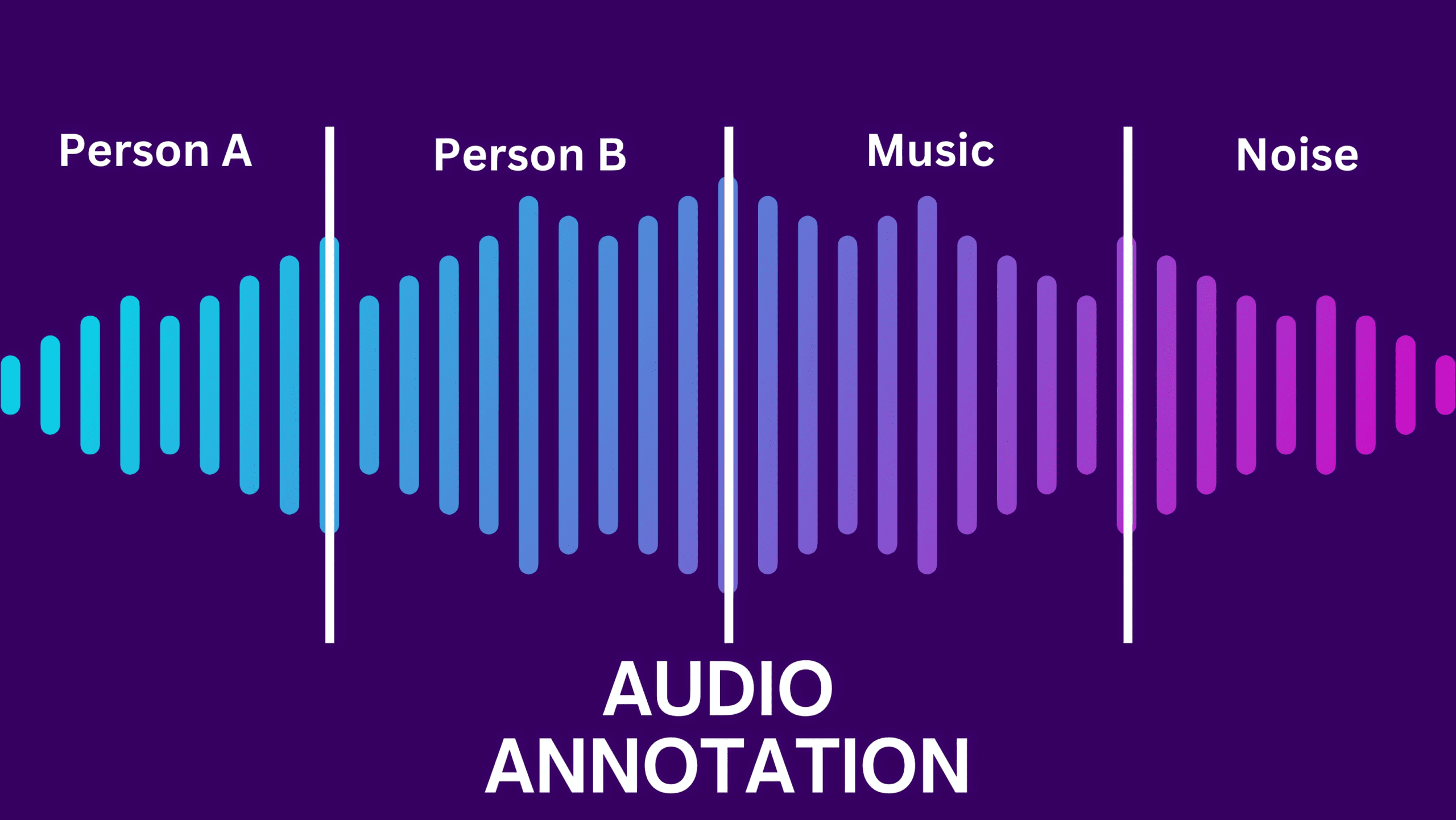
Audio annotation helps AI systems process and understand human speech by labeling audio data with transcripts, speaker information, and sound events. This enables machines to accurately interpret spoken language and respond intelligently.
Core Annotation Capabilities
- Speech-to-Text Transcription: Convert spoken audio into accurate text.
- Speaker Identification: Distinguish between multiple speakers.
- Emotion Detection: Analyze tone and sentiment in voice.
- Sound Event Tagging: Identify background sounds and audio events.
- Phoneme Labeling: Break speech into smaller sound units for precision.
Audio Annotation Use Cases
- Voice Assistants for natural conversations.
- Call Center Analytics for customer insights.
- Speech Recognition Systems for automation.
- Media & Entertainment for subtitle generation.
- Healthcare for voice-based diagnostics and monitoring.
High-quality audio annotation improves the accuracy of AI models, enabling better understanding of accents, dialects, and speech variations across different languages.
Audio annotation gives machines the ability to hear, understand, and respond — just like humans.
Advanced Voice AI Solutions
By combining audio annotation with deep learning and NLP, businesses can build intelligent systems capable of real-time transcription, voice commands, and conversational interactions. These innovations are shaping the future of voice-driven technology.